“So, we’re constantly looking and trying to figure out who are the intelligence officers and who are they meeting with? So, covert communications is the way that a spy passes information secretly to the handler, or the handler passes requests and other information back to the spy. ...
The way information is stored now makes it not only easier to use, but makes it far more vulnerable. If we can penetrate a network, we have everything. We own the kingdom.
So now, where throughout history spies stole the information and technology was used to convey it, it’s now just flipped around. The spy is now often the person that is simply the conveyor of the gadget that penetrates the network, because we now select spies, not by access to the secrets that they personally can get, but the access to the networks. So the person that maintains the network or the person that hypothetically buys the office equipment, such as the printers, could embed a chip into the printer and the printer, when they plug it into the network, now infects the entire network and now you’ve got a virus in the entire network. Now the human is the carrier of technology, as opposed to the technology being the carrier of small bits of information. How information is stores determines how vulnerable it is.”“The digital world has changed everything we know about espionage."
From: http://m.technobuffalo.com/2012/11/26/interview-spy-historian-h-k-melton-explains-how-tech-changed-spying-forever/
SpyWriter Jack King "A new King of thrillers on the horizon" www.SpyWriter.com
Showing posts with label Spying. Show all posts
Showing posts with label Spying. Show all posts
13/12/2012

25/11/2012
Spying, it's a women's world

"On a moonlit night in June 1943, Noor, fresh from spy school at Beaulieu, was the first female radio operator ever to be dropped into Nazi-occupied France. As part of a network of agents responsible for sending intelligence back to England, “Madeleine” was equipped with a transmitter/receiver device, weighing about 30 pounds and fitting into an ordinary suitcase. With German wireless direction-finding vehicles — typically disguised as laundry and baker’s vans — regularly circling round, she had to be constantly vigilant, always finding surreptitious new locations and never staying on air for long. It was also crucial that she gave the unwavering impression of being completely French, never uttering a word or displaying a gesture that might give her away. For emergencies, she had four pills: Benzedrine, in case she needed to stay awake for a long spell; a sleeping pill, to drop in an enemy’s drink in a tight spot; a drug to induce stomach disturbance; and of course cyanide, to be bitten if she chose to die rather than endure torture or interrogation."
More: http://www.salon.com/2012/11/08/the_spy_game_no_men_need_apply/?mobile.html
Jack King "A new King of thrillers": www.SpyWriter.com
09/11/2012
The end of espionage thriller?
Can't find a decent espionage thriller these days? Don't blame it on Perestroika. Blame it on not reading SpyWriter Jack King:
"The end of the Cold War created a problem for espionage thriller writers and moviemakers. They faced loss of a built-in backstory needing no explanation, a whole set of strong but realistic motivations for extreme behavior, a pre-fab cast of bad guys, and weighty, global stakes underlying all the action. Perestroika left a generation of writers searching for new conflicts and settings and plot devices.
Today I think the growth of surveillance technology will increasingly create a similar problem for fiction writers. It’s a staple of thrillers and science fiction to have the hero on the run—hounded by the government, evading the police—either because the hero is mistaken as someone bad or because the government is evil. And the government baddies use every technology at their disposal to locate and track their target, while the hero uses tricks and hacks to escape detection.
But the whole cat and mouse game is starting to look kind of problematic, because it’s getting harder to sustain a plausible “man on the run” scenario in the face of surveillance technology.
I like a good airport thriller or science fiction read, and for several years I’ve noticed this problem cropping up: it’s the near future (or later), the hero or heroine is on the run, and I find myself thinking, oh please, if they really had all the advanced technologies featured in this story, they’d certainly have more impressive surveillance capability! We may have more than that ourselves in couple years the way things are going."
From: http://www.aclu.org/blog/technology-and-liberty-national-security/will-increasing-surveillance-change-fiction
Presidents are chosen, but not elected. The Black Vault. www.SPYWRITER.com
"The end of the Cold War created a problem for espionage thriller writers and moviemakers. They faced loss of a built-in backstory needing no explanation, a whole set of strong but realistic motivations for extreme behavior, a pre-fab cast of bad guys, and weighty, global stakes underlying all the action. Perestroika left a generation of writers searching for new conflicts and settings and plot devices.
Today I think the growth of surveillance technology will increasingly create a similar problem for fiction writers. It’s a staple of thrillers and science fiction to have the hero on the run—hounded by the government, evading the police—either because the hero is mistaken as someone bad or because the government is evil. And the government baddies use every technology at their disposal to locate and track their target, while the hero uses tricks and hacks to escape detection.
But the whole cat and mouse game is starting to look kind of problematic, because it’s getting harder to sustain a plausible “man on the run” scenario in the face of surveillance technology.
I like a good airport thriller or science fiction read, and for several years I’ve noticed this problem cropping up: it’s the near future (or later), the hero or heroine is on the run, and I find myself thinking, oh please, if they really had all the advanced technologies featured in this story, they’d certainly have more impressive surveillance capability! We may have more than that ourselves in couple years the way things are going."
From: http://www.aclu.org/blog/technology-and-liberty-national-security/will-increasing-surveillance-change-fiction
Presidents are chosen, but not elected. The Black Vault. www.SPYWRITER.com
29/10/2012
The subtle difference between a "spy" and an "intelligence agent"
Q: "What exactly were you doing in the U.S.? What is it called? Spying?"
A: "It’s the same thing the American special services are doing in Russia. The English word “spy” may refer to what the Russians call “spy” or “intelligence agent.” It depends on how you look at it. It’s no accident that, in the Soviet Union, the good guys were called “intelligence agents” and the enemies were called “spies.” ...
"intelligence does not work against specific people. It’s not permanent and assignments can change. As a secret agent, you work for the good of your country. Crimes may be committed against specific people, but intelligence is a patriotic business."
More: http://indrus.in/articles/2012/10/19/russian_spy_reveals_his_secrets_18485.html
A: "It’s the same thing the American special services are doing in Russia. The English word “spy” may refer to what the Russians call “spy” or “intelligence agent.” It depends on how you look at it. It’s no accident that, in the Soviet Union, the good guys were called “intelligence agents” and the enemies were called “spies.” ...
"intelligence does not work against specific people. It’s not permanent and assignments can change. As a secret agent, you work for the good of your country. Crimes may be committed against specific people, but intelligence is a patriotic business."
More: http://indrus.in/articles/2012/10/19/russian_spy_reveals_his_secrets_18485.html
Miniature spying insects
A miniature spying insect:

"Next time a pesky insect lands on you take a close look at it before you swat it away because you could be in for a nasty surprise.
What might appear to be a mosquito or something similar could, in fact, be a miniature spy drone which is snooping on you and being controlled by someone thousands of kilometres away."
More: http://www.nbr.co.nz/article/beware-intelligent-insects-they-are-spying-you-weekend-review-rv-131241
What might appear to be a mosquito or something similar could, in fact, be a miniature spy drone which is snooping on you and being controlled by someone thousands of kilometres away."
More: http://www.nbr.co.nz/article/beware-intelligent-insects-they-are-spying-you-weekend-review-rv-131241
14/03/2012
How to hide from Big Brother's Online Eyes
We're all online, and everything we do there leaves a trail. Big Brother left a blueprint for the type of information you need to protect if you want to hide your tracks:
"Further proof has emerged of the United States secret Grand Jury investigation into Julian Assange and WikiLeaks."
The secret Grand Jury demanded the following information from WikiLeaks' DNS host:
1. Subscriber names, user names, screen names, or other identities;
2. mailing addresses, residential addresses, business addresses, e-mail addresses, and other contact information;
3. connection records, or record of session times and durations;
4. length of service (including start date) and typos of service utilized;
5. telephone or instrument number or other subscriber number or identity; including any temporarily assigned network address; and
6. means and source of payment for such service (including any credit card or bank account number) and billing records.
Also:
1. records of user activity for any connections made to or from the Account
2. non-content information associated with the contents of any communication or file stored by or for the account(s), such as the source and destination email addresses and IP addresses.
3. Correspondence and notes of records related to the account."
From: http://rabble.ca/news/2011/08/us-espionage-investigation-against-wikileaks-patriot-act-order-unsealed
### END OF POST ###
www.SPYWRITER.com
"Further proof has emerged of the United States secret Grand Jury investigation into Julian Assange and WikiLeaks."
The secret Grand Jury demanded the following information from WikiLeaks' DNS host:
1. Subscriber names, user names, screen names, or other identities;
2. mailing addresses, residential addresses, business addresses, e-mail addresses, and other contact information;
3. connection records, or record of session times and durations;
4. length of service (including start date) and typos of service utilized;
5. telephone or instrument number or other subscriber number or identity; including any temporarily assigned network address; and
6. means and source of payment for such service (including any credit card or bank account number) and billing records.
Also:
1. records of user activity for any connections made to or from the Account
2. non-content information associated with the contents of any communication or file stored by or for the account(s), such as the source and destination email addresses and IP addresses.
3. Correspondence and notes of records related to the account."
From: http://rabble.ca/news/2011/08/us-espionage-investigation-against-wikileaks-patriot-act-order-unsealed
### END OF POST ###
www.SPYWRITER.com
27/02/2012
The Bridge of Spies
[caption id="" align="aligncenter" width="500" caption="The bridge od spies"] [/caption]
On June 12, 1985, Marian Zacharski, a Polish spy, was exchanged for 25 American agents.
"Polish-born, Marian Zacharski adopted the guise of a legitimate businessman in the United States in the late 1970s. The reportedly handsome and resourceful agent befriended William Holden Bell, an engineer at Hughes Aircraft. Over the course of three years, Zacharski persuaded Bell to pass along plans for secret radar systems and some of the technology behind early stealth aircraft. Zacharski’s tactics in recruiting Bell were so impressive that they are still studied by the FBI decades later."
More spy exchanges: http://www.history.com/news/2012/02/10/prisoner-exchanges-across-the-bridge-of-spies-from-powers-to-shcharansky/
### END OF POST ###
www.SPYWRITER.com
[/caption]On June 12, 1985, Marian Zacharski, a Polish spy, was exchanged for 25 American agents.
"Polish-born, Marian Zacharski adopted the guise of a legitimate businessman in the United States in the late 1970s. The reportedly handsome and resourceful agent befriended William Holden Bell, an engineer at Hughes Aircraft. Over the course of three years, Zacharski persuaded Bell to pass along plans for secret radar systems and some of the technology behind early stealth aircraft. Zacharski’s tactics in recruiting Bell were so impressive that they are still studied by the FBI decades later."
More spy exchanges: http://www.history.com/news/2012/02/10/prisoner-exchanges-across-the-bridge-of-spies-from-powers-to-shcharansky/
### END OF POST ###
www.SPYWRITER.com
24/02/2012
The absurd world of espionage
"From propaganda catapults to exploding seashells, why do "intelligence" services come up with so many bad, and often absurd, ideas?
Well, maybe they aren't coming up with all that many stupid ideas: maybe they come up with exactly as many stupid ideas as, say, the U.S. House of Representatives, but we pay more attention to the CIA's nonsense because we're more surprised by it. After all, these people, at least, are supposed to have some idea of what they're doing.
But reading through some of these stories, you start to wonder if there might be another explanation. The CIA's looniest notions, after all, bear remarkable resemblance to the loony ideas that seem to constantly pour out of totalitarian dictatorships, including current ones such as that of North Korea. Maybe it's the very fact of brainstorming behind closed doors -- six guys in a room trying to figure out a way to do whatever currently seems impossible -- that encourages it. Desperation plus not having anyone to laugh at you (whether because of secrecy or, in the case of North Korea, because you've got the entire country in a headlock) must be a pretty potent combination."
More: http://m.theatlantic.com/international/archive/2012/02/spy-agencies-have-had-some-very-dumb-ideas-new-documents-reveal/253238/
### END OF POST ###
www.SPYWRITER.com
Well, maybe they aren't coming up with all that many stupid ideas: maybe they come up with exactly as many stupid ideas as, say, the U.S. House of Representatives, but we pay more attention to the CIA's nonsense because we're more surprised by it. After all, these people, at least, are supposed to have some idea of what they're doing.
But reading through some of these stories, you start to wonder if there might be another explanation. The CIA's looniest notions, after all, bear remarkable resemblance to the loony ideas that seem to constantly pour out of totalitarian dictatorships, including current ones such as that of North Korea. Maybe it's the very fact of brainstorming behind closed doors -- six guys in a room trying to figure out a way to do whatever currently seems impossible -- that encourages it. Desperation plus not having anyone to laugh at you (whether because of secrecy or, in the case of North Korea, because you've got the entire country in a headlock) must be a pretty potent combination."
More: http://m.theatlantic.com/international/archive/2012/02/spy-agencies-have-had-some-very-dumb-ideas-new-documents-reveal/253238/
### END OF POST ###
www.SPYWRITER.com
04/01/2012
History of MI6 written with blood and sex
"An MI6 agent became a serial killer as he used pretty young women to lure Russians to their deaths with the promise of sex [...]
A Cossack colonel called Mohammed Bek Hadji Lashet, and his gang used the women to attract communists to a lakeside villa where they were tortured and then killed, according to a new history of the intelligence service.
After moving to Stockholm he offered himself as an agent to the Americans but they were so worried by what he offered to do for them that they thought he was an “agent provocateur” and turned him down.
Lashet and 15 of his compatriots appear to have lured four Bolsheviks to their deaths, two of them Soviet embassy officials in Stockholm, which had become a hotbed of Western spies.
They used women who included a blonde and a dark-haired “exotic” woman from central Asia, to attract their targets."
More: http://www.telegraph.co.uk/news/uknews/defence/8010063/Communists-lured-to-their-deaths-by-MI6-with-promise-of-sex.html
### END OF POST ###
www.SPYWRITER.com
A Cossack colonel called Mohammed Bek Hadji Lashet, and his gang used the women to attract communists to a lakeside villa where they were tortured and then killed, according to a new history of the intelligence service.
After moving to Stockholm he offered himself as an agent to the Americans but they were so worried by what he offered to do for them that they thought he was an “agent provocateur” and turned him down.
Lashet and 15 of his compatriots appear to have lured four Bolsheviks to their deaths, two of them Soviet embassy officials in Stockholm, which had become a hotbed of Western spies.
They used women who included a blonde and a dark-haired “exotic” woman from central Asia, to attract their targets."
More: http://www.telegraph.co.uk/news/uknews/defence/8010063/Communists-lured-to-their-deaths-by-MI6-with-promise-of-sex.html
### END OF POST ###
www.SPYWRITER.com
12/12/2011
The double agent spy who came back from the dead
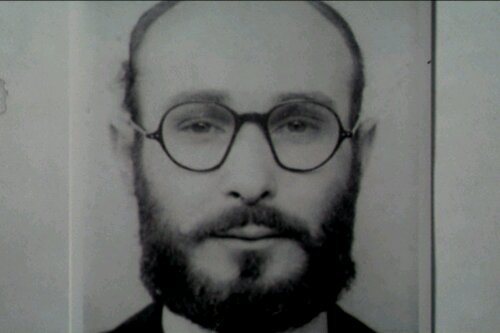
Juan Pujol "Garcia, code-named "Garbo" by his MI5 handlers because he was "the world’s best actor," was the man who more than anyone else convinced Hitler that the Normandy landings were a mere diversionary attack, a feint to distract the Wehrmacht from the real assault that was about to take place 150 miles to the north in the Pas de Calais. So successful was Garbo that the Germans were continuing to reinforce the Pas de Calais even after D-Day, and not committing their full resources to countering the Normandy landings. Although the story of the success of the Operation Overlord deception plans are well known, and Garbo’s vital role well established in history, what is not much known about is what Garbo did after the war".
[...] the story of Garcia’s life of deception did not end with VE Day. After visiting his Abwehr case officer in Spain—who apologized that the Nazis had lost the war and gave him a huge golden handshake in cash, the Iron Cross, and the thanks of the now-defunct Reich—MI5 unsuccessfully tried to recruit Garcia for service against the Russians in the Cold War. The next that anyone ever heard of him was that he had tragically died of a snake bite in Angola in 1949."
Or, did he?
### END OF POST ###
www.SPYWRITER.com
10/12/2011
What is better than sex, according to the CIA
"The first honeytrap in recorded history come in the Bible where the two honeypots in chief were Delilah and Judith. The latter seduced the enemy commander Holofernes and assassinated him, and famously Delilah seduced Samson and got him to reveal the secret of his enormous strength (his hair), before she went on to be immortalised in song by Tom Jones.
In the modern era honeypots (of both sexes) were used by both sides in the Cold War but perhaps because they were ultimately defeated, we know a lot more about the honeypot techniques of the KGB and Stasi (the East German secret police) than we do of the techniques employed by the Americans and British. In the Soviet Union, for instance, “swallow” was the KGB codename for women honeypots, and “raven” the term for men. An ex-CIA officer has claimed that the West “found that offers of money and freedom worked better.”
More: http://www.sabotagetimes.com/people/katia-zatuliveter-and-the-art-of-the-spy-honey-trap/
### END OF POST ###
www.SPYWRITER.com
01/12/2011
Spies you don't hear about
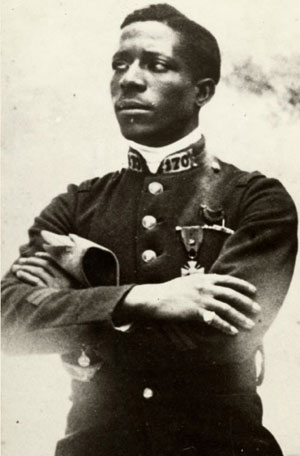
"Born in Columbus, Georgia, in 1894, Eugene Jacques Bullard stowed away to Europe as a teenager, earning money as a prizefighter and interpreter. When World War I erupted he joined the French army and ultimately became the world’s first black fighter pilot. He later married the daughter of a French countess, opened a nightclub in Paris and hobnobbed with the likes of Josephine Baker, Louis Armstrong and Ernest Hemingway.
Bullard served France once again during World War II, joining the resistance movement and using his fluency in German to spy on Nazi troops who frequented his establishment. (His German clients apparently spoke freely in front of him, believing that nonwhites were incapable of understanding their language.)
Bullard later helped defend the city of Orléans, sustained debilitating injuries and was medically evacuated along with his two daughters to the United States. A hero in his adoptive country, Bullard had to rebuild his life in his homeland, where he worked for many years as an elevator operator in New York City. He died at age 67 in 1961, two years after France named him a Knight of the Legion of Honor."
More spies: http://www.history.com/news/2011/12/01/10-spies-who-arent-household-names/
### END OF POST ###
www.SPYWRITER.com
27/11/2011
The Real 'James Bond'
"The real James Bond was an “incorrigible raconteur” with a penchant for pretty women and fast cars [...]
Commander Wilfred Dunderdale was known as “Biffy” because of his prowess as a boxer in the Royal Navy at the end of the First World War, according to the first official history of the service.
A picture from a false identity card shows he lacked his fictional counterpart’s good looks but Dunderdale is said to have become close friends with Ian Fleming, author of the James Bond novels, in later life, and claimed to recognise some of his own stories in the books."
More: http://www.telegraph.co.uk/news/uknews/defence/8017038/Real-James-Bond-revealed-in-MI6-archives.html
### END OF POST ###
www.SPYWRITER.com
23/11/2011
Brainless spies and criminals rejoice
An "example of putting brain waves into practice in a practical way is Brain Fingerprinting.
In Brain Fingerprinting, it is believed that when someone commits a crime, the event is stored as a memory. When the perpetrator is presented with evidence of the crime, the memory is triggered, creating a neurological response.
If the perpetrator is attached to a machine similar to an EEG, then this response can be recorded.
Brain Fingerprinting is still in its early stages, but is being seriously evaluated by the FBI as part of deception detection and profiling.
If this technique is perfected and coupled with Clark’s sensor technology, individuals such as criminals, and even spies could be easily identified.
Taking this technology a step further, it is conceivable that technology such as this could be used by a government to monitor the brain wave activity of its people or to detect espionage. Intelligence agents could use the technology to spy on foreign diplomats or scientists."
More: http://www.topsecretwriters.com/2011/11/could-us-intelligence-detect-brain-waves-to-spy/
### END OF POST ###
www.SPYWRITER.com
Camp 020, MI5's secret interrogation center
"The silence [...] gave little indication of the intensity and importance of the work being done in the building known as Camp 020, MI5’s secret interrogation center. Within those walls, captured German agents were questioned under the command of a ferociously tempered British officer named Lieutenant Colonel Robin Stephens. Boorish, disdainful of the non-English but half-German himself, Stephens was nicknamed “Tin Eye” for the monocle he was said to wear even when he slept. He had a record of breaking down even the most hardened of German spies.
“Figuratively, a spy in war should be at the points of a bayonet,” wrote Stephens, who insisted that he be addressed as the “commandant.” Yet he was adamant about one thing at Camp 020. “Violence is taboo,” he wrote, “for not only does it produce answers to please, but it lowers the standard of information.” In his instructions for interrogators, Stephens wrote, “Never strike a man. In the first place it is an act of cowardice. In the second place, it is not intelligent. A prisoner will lie to avoid further punishment and everything he says thereafter will be based on a false premise.”
Read more: http://blogs.smithsonianmag.com/history/2011/11/the-monocled-world-war-ii-interrogator/
### END OF POST ###
www.SPYWRITER.com
06/11/2011
Why spies hang around toilets
"Deep inside the Central Intelligence Agency is a unit dedicated to uncovering the true physical and mental states of world leaders. The Medical and Psychological Assessment Cell, or MPAC, employs or consults physicians, sociologists, political scientists, and cultural anthropologists to examine the conditions of top officials.
Agents will collect medical waste items, which can yield important information about someone’s medical condition.
“No discarded bandage or something like a syringe should be discounted because you can draw DNA and blood types and you can do some examination on the contents of even a discarded band-aid to try to determine perhaps what’s wrong with that person. So, as unseemly as that may sound, this is what intelligence services do".
Then there are sort of apocryphal stories, which probably have some truth to it, that they have been able to surreptitiously obtain bodily fluids. And there are sort of several well-known examples of diverting plumbing in [the presidential guest residence] Blair House, or other places abroad where they are able to obtain stool and urine samples."
More: http://www.voanews.com/english/news/usa/Spies-Track-Physical-Illnesses-of-Foreign-Leaders-130222673.html
03/11/2011
Occult in Espionage
"Occult influences in modern intelligence culture can be revealed historically, iconically and through a review of language used to describe covert communications. The use of encoded language to conceal information concerning spiritual sciences and the acquisition of supernatural human performance capabilities (against religious prosecution and abuse by underdeveloped persons of questionable character) predates the use of encryption for political purposes only. A crypt
, for example, describes an underground burial vault in the modern use of the term. In this sense, to “encrypt” is to bury a person, whereas “decryption” implies the raising of the dead from their graves.
These same influences are seen in agency logos. The former British Military Intelligence (MI5) logo, for example, includes the Eye of Providence
or “All-Seeing Eye” in the capstone of a pyramid, reflecting the reverse of the Great Seal of the United States and that symbol’s current use on the back of the US one dollar bill. From this perspective, even the acronym CIA (Central Intelligence Agency) can be interpreted as an example of both applied transposition and substitution ciphers revealing CIA->ACI-> All C-ing I->All-Seeing Eye.
In the most archaic sense, the “All-Seeing Eye” represents a performance characteristic of clairvoyant persons, whose practice of mental concentration promotes Ajina Chakra (“Third Eye”) activation via the ascent of their dormant or sleeping microcosmic potential (Sanskritkundalini), allowing lucid perceptions of intelligence from beyond the constraints of time, designating those individuals as seer, soothsayer or sorcerer."
More: http://m.examiner.com/exVancouver/pm_99243/contentdetail.htm?contentguid=9Lcxfpqv
06/10/2011
Working for the MI5
"I’m assured that many things people believe about MI5’s recruitment processes are myths. It is not true that it doesn’t recruit tall people, for instance. There is a height restriction for those who want to work in its mobile surveillance teams, but that is quite different to the digital stuff. It doesn’t kill anyone either. “The Security Service is subject to the rule of law in the same way as any other public body.”
That said, you do have to be very secretive. I am told: “You must not discuss your application, other than with your partner or close family.” MI5 does not disclose the names of any of its staff – the sole exception being the director general. If you’re interested, you do have to ask yourself seriously if you’re discreet enough. You must be the sort of person who does not need to discuss work with friends and family.
Put bluntly: “If publicly celebrating your career successes is important to you, you should reconsider your suitability.”
More: http://www.cityam.com/business-features/not-spooks-still-exciting
03/10/2011
How to spot an American [spy] overseas
By their backside in their hosts' faces, apparently:
"As the agency’s leading disguise specialists, the Mendezes spent decades creating false identities for American spies
Often, the biggest challenge facing the Mendezes wasn’t coming up with fake mustaches and plausible covers — it was teaching agents to act less, well, American.
To wit: Europeans stand up straight in elevators, with their weight on both feet. Americans slouch, leaning against walls and railings. In movie theaters, Americans walk though crowded rows facing the screen; by contrast, Europeans face the audience, because they consider sticking their backsides in their fellow patrons’ faces to be rude.
Mrs. Mendez said contemporary American agents have to be taught to smoke. Mr. Mendez added that even the American habit of daily showering can be a giveaway.
“In Moscow, we made sure agents had the right amount of garlic, vodka and plain old B.O."
More: http://m.washingtontimes.com/news/2011/sep/27/behind-the-mask/?page=all
29/09/2011
Health espionage
"The Central Intelligence Agency has a Medical and Psychological Assessment Cell. It employs or consults with doctors, sociologists, political scientists and cultural anthropologists to examine the conditions of top officials.
In the late fifties and early nineteen sixties, the CIA decided that they had expertise to look more carefully and in a more rigorous, analytical way at the health of foreign leaders in order to help give policy makers some forewarning of a transition in a government, stability of foreign governments, and also looking for potential points of diplomatic leverage.
The concern is not just the illness, it's also the medication that people take while they are ill and how that can compromise their decision-making ability, cognitively and intellectually. So they don’t make the same kind of decisions, their decisions may not be as predictable. They certainly may not be as, quote unquote, rational.
It can be decisively important because it can really change the stability of governments, particularly in authoritarian or totalitarian regimes, where there’s really a limited number of people who have powerful decision-making authority."
More: http://www.voanews.com/learningenglish/home/Medical-Spies-Keep-Watch-on-Leaders-130699748.html
Subscribe to:
Posts (Atom)