Showing posts with label Spies. Show all posts

27/02/2012

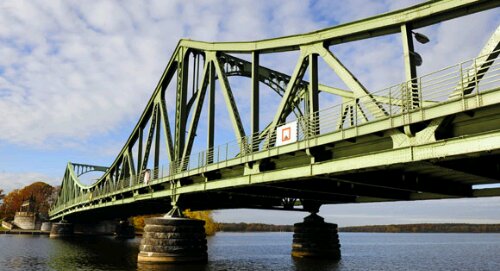
The Bridge of Spies

[caption id="" align="aligncenter" width="500" caption="The bridge od spies"]image[/caption]


On June 12, 1985, Marian Zacharski, a Polish spy, was exchanged for 25 American agents.

"Polish-born, Marian Zacharski adopted the guise of a legitimate businessman in the United States in the late 1970s. The reportedly handsome and resourceful agent befriended William Holden Bell, an engineer at Hughes Aircraft. Over the course of three years, Zacharski persuaded Bell to pass along plans for secret radar systems and some of the technology behind early stealth aircraft. Zacharski’s tactics in recruiting Bell were so impressive that they are still studied by the FBI decades later."

More spy exchanges: http://www.history.com/news/2012/02/10/prisoner-exchanges-across-the-bridge-of-spies-from-powers-to-shcharansky/


### END OF POST ###
www.SPYWRITER.com

27/01/2012

US intelligence community to brush up on literature

Well, not exatly. They're going to leave it up to computers, and the interest spans literature and spoken word, all in an effort to catch the meaning behind that, which is often elusive: metaphors.

"Researchers with the US Intelligence Advanced Research Projects Activity want to build a repository of metaphors. You read that right.  Not just American/English metaphors mind you but those of Iranian Farsi, Mexican Spanish and Russian speakers.

In the end the program should produce a methodology, tools and techniques together with a prototype system that will identify metaphors that provide insight into cultural beliefs. It should also help build structured framework that organizes the metaphors associated with the various dimensions of an analytic problem and build a metaphor repository where all metaphors and related information are captured for future reference and access[...]

Stories exert a powerful influence on human thoughts and behavior. They consolidate memory, shape emotions, cue heuristics and biases in judgment, influence in-group/out-group distinctions, and may affect the fundamental contents of personal identity. It comes as no surprise that these influences make stories highly relevant to vexing security challenges such as radicalization, violent social mobilization, insurgency and terrorism, and conflict prevention and resolution. Therefore, understanding the role stories play in a security context is a matter of great import and some urgency".

From: http://m.networkworld.com/community/blog/apple-my-eye-us-fancies-huge-metaphor-reposit


### END OF POST ###
www.SPYWRITER.com
04/01/2012

History of MI6 written with blood and sex

"An MI6 agent became a serial killer as he used pretty young women to lure Russians to their deaths with the promise of sex [...]

A Cossack colonel called Mohammed Bek Hadji Lashet, and his gang used the women to attract communists to a lakeside villa where they were tortured and then killed, according to a new history of the intelligence service.

After moving to Stockholm he offered himself as an agent to the Americans but they were so worried by what he offered to do for them that they thought he was an “agent provocateur” and turned him down.

Lashet and 15 of his compatriots appear to have lured four Bolsheviks to their deaths, two of them Soviet embassy officials in Stockholm, which had become a hotbed of Western spies.

They used women who included a blonde and a dark-haired “exotic” woman from central Asia, to attract their targets."

More: http://www.telegraph.co.uk/news/uknews/defence/8010063/Communists-lured-to-their-deaths-by-MI6-with-promise-of-sex.html


### END OF POST ###
www.SPYWRITER.com

12/12/2011

The double agent spy who came back from the dead

image

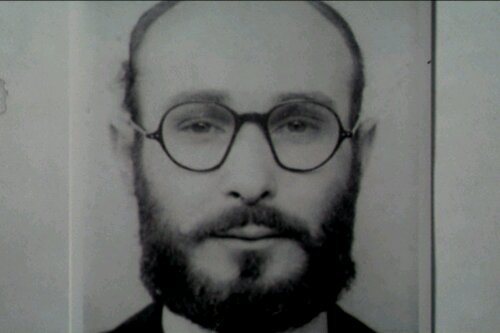
Juan Pujol "Garcia, code-named "Garbo" by his MI5 handlers because he was "the world’s best actor," was the man who more than anyone else convinced Hitler that the Normandy landings were a mere diversionary attack, a feint to distract the Wehrmacht from the real assault that was about to take place 150 miles to the north in the Pas de Calais. So successful was Garbo that the Germans were continuing to reinforce the Pas de Calais even after D-Day, and not committing their full resources to countering the Normandy landings. Although the story of the success of the Operation Overlord deception plans are well known, and Garbo’s vital role well established in history, what is not much known about is what Garbo did after the war".


[...] the story of Garcia’s life of deception did not end with VE Day. After visiting his Abwehr case officer in Spain—who apologized that the Nazis had lost the war and gave him a huge golden handshake in cash, the Iron Cross, and the thanks of the now-defunct Reich—MI5 unsuccessfully tried to recruit Garcia for service against the Russians in the Cold War. The next that anyone ever heard of him was that he had tragically died of a snake bite in Angola in 1949."


Or, did he?


Read More: http://www.thedailybeast.com/articles/2011/11/27/garbo-the-spy-documentary-on-the-double-agent-who-helped-defeat-hitler.html


### END OF POST ###
www.SPYWRITER.com
09/12/2011

This ain't no James Bond - Real Spy Stories


"Although the Cold War saw some cool spy shenanigans, nothing beats the insanity of World War II. Eddie Chapman was a British criminal who was in prison on the Channel Islands when the Axis powers took them. They let him out when he promised to go back to England and spy for them, but what Hitler and his cronies didn't think about was that criminals tend to lie. When he got back home, Chapman went immediately to MI5 and turned himself in, offering to work as a triple agent. The whole time he was feeding false info to the Nazis (who rewarded him with a huge salary and his own yacht), he was still engaging in scummy deeds like doping greyhounds to fix dog races."

See more: http://www.ugo.com/web-culture/real-spy-stories

### END OF POST ###
www.SPYWRITER.com

01/12/2011

Spies you don't hear about

image

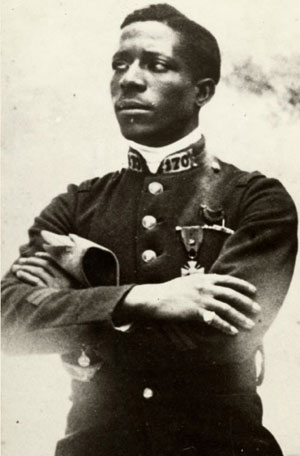
"Born in Columbus, Georgia, in 1894, Eugene Jacques Bullard stowed away to Europe as a teenager, earning money as a prizefighter and interpreter. When World War I erupted he joined the French army and ultimately became the world’s first black fighter pilot. He later married the daughter of a French countess, opened a nightclub in Paris and hobnobbed with the likes of Josephine Baker, Louis Armstrong and Ernest Hemingway.


Bullard served France once again during World War II, joining the resistance movement and using his fluency in German to spy on Nazi troops who frequented his establishment. (His German clients apparently spoke freely in front of him, believing that nonwhites were incapable of understanding their language.)


Bullard later helped defend the city of Orléans, sustained debilitating injuries and was medically evacuated along with his two daughters to the United States. A hero in his adoptive country, Bullard had to rebuild his life in his homeland, where he worked for many years as an elevator operator in New York City. He died at age 67 in 1961, two years after France named him a Knight of the Legion of Honor."


More spies: http://www.history.com/news/2011/12/01/10-spies-who-arent-household-names/


### END OF POST ###
www.SPYWRITER.com

27/11/2011

The Real 'James Bond'

"The real James Bond was an “incorrigible raconteur” with a penchant for pretty women and fast cars [...]


Commander Wilfred Dunderdale was known as “Biffy” because of his prowess as a boxer in the Royal Navy at the end of the First World War, according to the first official history of the service.


A picture from a false identity card shows he lacked his fictional counterpart’s good looks but Dunderdale is said to have become close friends with Ian Fleming, author of the James Bond novels, in later life, and claimed to recognise some of his own stories in the books."


More: http://www.telegraph.co.uk/news/uknews/defence/8017038/Real-James-Bond-revealed-in-MI6-archives.html


### END OF POST ###
www.SPYWRITER.com

29/09/2011

Health espionage

"The Central Intelligence Agency has a Medical and Psychological Assessment Cell. It employs or consults with doctors, sociologists, political scientists and cultural anthropologists to examine the conditions of top officials.


In the late fifties and early nineteen sixties, the CIA decided that they had expertise to look more carefully and in a more rigorous, analytical way at the health of foreign leaders in order to help give policy makers some forewarning of a transition in a government, stability of foreign governments, and also looking for potential points of diplomatic leverage.


The concern is not just the illness, it's also the medication that people take while they are ill and how that can compromise their decision-making ability, cognitively and intellectually. So they don’t make the same kind of decisions, their decisions may not be as predictable. They certainly may not be as, quote unquote, rational.


It can be decisively important because it can really change the stability of governments, particularly in authoritarian or totalitarian regimes, where there’s really a limited number of people who have powerful decision-making authority."


More: http://www.voanews.com/learningenglish/home/Medical-Spies-Keep-Watch-on-Leaders-130699748.html

28/09/2011

Hiding messages in gene-modified microbes

"Forget invisible ink or lemon juice – spies can now send messages hidden in genetically engineered bacteria. The new method, dubbed steganography by printed arrays of microbes (SPAM), uses a collection of "Escherichia coli" strains modified with fluorescent proteins that glow in a range of seven colours.


Each character of the message is encoded using two colours, creating 49 possible combinations – enough for the alphabet, the figures 0 to 9 and a few other symbols. "You can think of all sorts of secret spy applications," saysDavid Walt, a chemist at Tufts University in Medford, Massachusetts, who led the research.


The new technique is not the first example of biological encryption – researchers have previously hidden messages in DNA
 – but Walt says his method is easier to use. "If you're out in the field and trying to send a message, you're not going to have access to a DNA synthesiser," he says, whereas you could carry vials of bacteria.


The bacterial code has a much lower information density than DNA, however, which would limit the size of a message. "You probably could send 500 to 1000 symbols on a regular piece of paper," says Walt – enough for a quick mission update, but it probably won't let you smuggle state secrets out of a country."


More: http://www.newscientist.com/mobile/article/dn20965