 "Having finished your first novel, you have polished it to the best of your abilities, got rave reviews from your peer group of ‘wanna be' authors, and you think the most difficult part of your journey, of becoming an internationally published author is over. But, it is not. Before you seek an international publisher in mature markets like London or New York, you have to find a literary agent. ‘Finding a literary agent is akin to finding God [...]
Many first-time writers, especially those not familiar with the ‘behind the scenes' of publishing industry, would ask: Why do we need a literary agent in the first place? To answer this question, we need to understand what exactly an agent does. An agent, for an author, is an editorial consultant, a writing coach and a critic rolled into one. She markets your work to the right publishers. She also takes care of your financial interest. Above all, she understands the nitty-gritties of publishing, everything from e-book royalties and permission forms, to movie option agreements." source
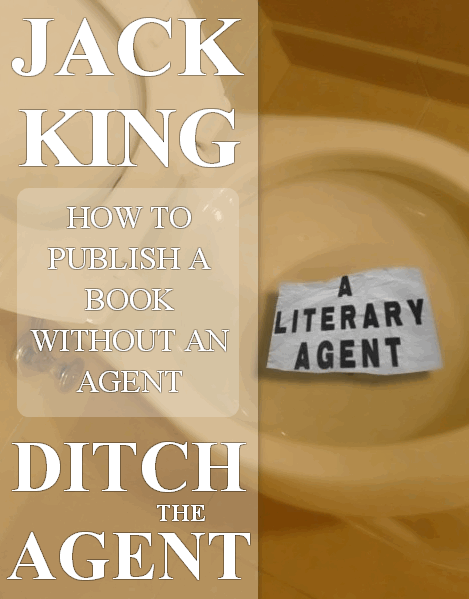
Are literary agents Gods of the industry? Do you need a literary agent to publish a book with a 'traditional' publisher? The title says it all:

 "This fascinating new study shows how the CIA and the British secret service, in collaboration with the military alliance NATO and European military secret services, set up a network of clandestine anti-communist armies in Western Europe after World War II.
 "Smartphones and e-mail might be revolutionising espionage, but old-style personal spycraft is as important as ever when it comes to protecting -- or breaking -- state and corporate secrets.
 "Most Western states have powerful spy agencies that can read most domestic traffic, and sometimes overseas messages as well. How this functions is controlled by legislation, although this varies and it is impossible to tell how tightly it is followed.
 "The government and publishers have been called upon to come out with measures that will forestall the breeding of 'negative literature' that has the potential to corrupt society", Said Professor Daniel Buor and "appealed to support publishers through the award of contracts for them to publish relevant literary works for public consumption [...]", because "reading exposes the reader to wisdom and experience as well as abilities to enhance his experience and abilities to perform more efficiently". He advised that "it was equally important for publishers to be selective in their publications to curb moral decay in society, explaining that "pornographic literature is having a toll on the moral life of the youth and must be eliminated from the system".