23/11/2010

What memory will you leave behind

I must admit that I based my recent book purchase on the cover, or rather on the author's name. How could I resist the description -- the planned flooding of a village, written by Rasputin! Why, that sounded like James Dickey's Deliverance. Turned out however, that  Valentin Rasputin's novel, Farewell to Matyora, is a beautiful and lyrical tale of the changing world, departing of the old, and the coming of the new. It's an absorbing story about human destiny, penned by the author who has devoted his writing to spiritual dilemmas, and ethical and environmental issues. It's about the inhabitants of Matyora, farmers who must leave their village, and move to a city.

The following is my [imperfect] translation. Grandma Darya to her grandson Andrey:

"You praise the machine. That machines are working for you. Well, well. They no longer work for you, but you're working for them. And they have a lot of needs! Machine is not a horse, which you can feed oats and let it out to pasture. Machine will tear your veins open. Look how fast it runs, how it plows, scoops the earth. You're drawn to it. Machines get away from you, and you pursue them. You either catch up or not catch up with them, and these machines have created the next, without your input. Self-born, iron from iron. These new ones are faster. And you have to rush furiously so as not to be left behind. You no longer have time for each other... soon you'll ride over each other on the road, in pursuit of living faster. You know, in earlier times people had worked too, they did not sit with folded hands, but they worked leisurely, not like that. Now everything is done on the run. You run to work, and to the table - there is no time for anything. Even children are born in a race. And these children barely had time to be born, they barely stand on their feet, and are already out of breath.

You do not have to act like that, you do not have to rush blindly. Why not live your life in some order, think about the memory you leave behind. A memory remembers everything, it freezes the time, every little crumb of it…"


22/11/2010

Why every citizen should support the wars

"Alba wondered where so many Fascists had come from overnight, because in the country's long democratic history they had not been particularly noticeable, except for a few who got carried away during World War II and thought it amusing to parade in black shirts with their arms raised in salute - to the laughter and hissing of bystanders - and had never won any important role in the life of the country. Nor did she understand the attitude of the armed forces, most of whom came from the middle and working class and had traditionally been closer to the left than to the far right. She did not understand the state of civil war, nor did she realize that war is the soldiers' work of art, the culmination of all their training, the gold medal of their profession. Soldiers are not made to shine in times of peace. The coup gave them a chance to put into practice what they had learned in their barracks: blind obedience, the use of arms, and other skills that soldiers can master once they silence the scruples of their hearts."
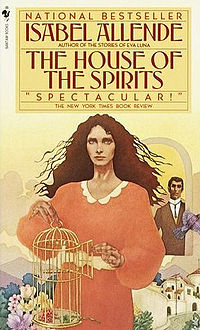
Isabel Allende, The House of the Spirits

Support the wars our mercenary armies are fighting overseas, because when they run out of external enemies the barrels of their guns will turn at you… ;/

21/11/2010

Have books at home, will succeed in life


"For years, educators have thought the strongest predictor of attaining high levels of education was having parents who were highly educated. But, strikingly, this massive study showed that the difference between being raised in a bookless home compared to being raised in a home with a 500-book library has as great an effect on the level of education a child will attain as having parents who are barely literate (3 years of education) compared to having parents who have a university education (15 or 16 years of education). Both factors, having a 500-book library or having university-educated parents, propel a child 3.2 years further in education, on average. [...]

The researchers were struck by the strong effect having books in the home had on children's educational attainment even above and beyond such factors as education level of the parents, the country's GDP, the father's occupation or the political system of the country.

Having books in the home is twice as important as the father's education level, and more important than whether a child was reared in China or the United States. Surprisingly, the difference in educational attainment for children born in the United States and children born in China was just 2 years, less than two-thirds the effect that having 500 or more books in the home had on children (3.2 years)." source

19/11/2010

Latin-American Literature, my reading list


I have been a great admirer of Latin-American literature ever since high school. Magical realism has that effect on teenagers that it sweeps them entirely off their feet. In my case it still keeps me on my knees. I read new writers, and re-read some old favorites. It's a fascinating journey into self, and a great retrospective on literary tastes. Some things just don't change, in other cases it's hard to believe the early infatuation:

Cortazar remains as fascinating as ever, Borges' philosophy seems shallow now, Marquez is as ambivalent as ever, Vargas Llosa still indigestible, Carpentier climbs to the top of the list, etc...

Of course, Latin-American literature is more than just magical realism. Here's my partial reading list for the next weeks and months, something new and something old:

Eduardo Galeano
Isabel Allende
Jorge Luis Borges
Macedonio Fernandez (mentor of JL Borges)
Ricardo Paglia
Enrique Anderson Imbert
Jose Agustin
Julio Cortazar
Maonica Lavin
Elena Poniatowska
Alfonso Reyes
Carlos Monsivais
Gabriel Garcia Marquez
Adolfo Sanches Vazquez
Victoria Ocampo
Rebeca Orozco
Eduardo Mallea
Felipe Soto Viterbo
Adolfo Bioy Casares
Boris Vian
Octavio Paz
Farael Ramirez Heredia
Eladia Gonzalez
Ernesto Sabato
Jose Antonio Michel
Alejo Carpentier
Antonio Skarmeta
Gabriela Mistral
Ezequiel Martínez Estrada
Jorge Molist
José Ortega y Gasset
Carlos Fuentes
Raciel Trejo
Guillermo Cabrera Infante
Juan Carlos Onetti
Mario Benedetti
Manuel Peyrou
Jorge Semprun
Francisco Ayala
Leonardo Padura
...

18/11/2010

Spying, nothing to brag about


"Life of spies excites the imagination by various adventures, exotic trips, luxury and everyday risk. As in the movies about James Bond. However, today the cult of spies seems to be declining: the attitude of media and society toward Bond‘s colleagues is mostly negative.

Although the roots of espionage or spying are very deep, it gained impetus only in 19th century. The role of spies has especially increased during the World War I, and the Cold War could be considered as the golden age of the military intelligence. Although today there are no global conflicts, local wars and international tension increases the importance of secret services. Though required to be more transparent and honest, these services at the same time must be more open to the society. Activities of the spies are no longer considered taboo for the media, therefore everybody must have heard about at least one scandal related to the U.S. Central Intelligence Agency (CIA), the British Secret Intelligence Agency MI6, Russian Federal Security Service (FSB) or Israeli „Mossad“.

The society‘s aspiration to influence secret governmental political spheres is mostly expressed in the struggle against terrorism when radical actions are taken against independent actors. There the intelligence plays one of the key roles. CIA is active participant of this struggle, but at the same time it is one of the most criticized agencies out of the four secret services mentioned above.  The recent CIA‘s actions shocked the public when it became aware of the methods applied in the struggle against terrorism."

Continue reading

17/11/2010

When a book is too long (don't blame the writer)


A columnist with The Guardian wonders why today's books are so darn long:

"Christos Tsiolkas's The Slap is almost 500 pages and Ken Follett's doorstopper Fall of Giants, if anyone's counting, is about 850 pages, probably to appeal to his American readers. Is anyone editing these books? The truth is that they all bear the imprint of marketing, not editorial, values.

Literary elephantiasis starts across the Atlantic. North America has a lot to answer for. In the "pile 'em high" tradition, US bookshops love to display big fat books in the window. The cut-and-paste technology of word processors must bear some of the blame, but overwriting is part of the zeitgeist. Jonathan Franzen's Freedom is highly enjoyable but who's finishing it? The novel is at least 100 pages too long."

Danny Finkelman, of the Finkelman's 45s, wondered about long books, and what happened to those 250 page novels of his youth? I read recently "A Choice of Enemies", by Mordecai Richler, a novel from 1957, set in Europe, and portraying Canadian and American artists exiled by McCarthy and his criminal disciples. The protagonist is a thriller writer:

"His agent in New York had sent him a copy of the letter from the publisher. They liked his latest thriller, but they wanted it expanded to a minimum of sixty thousand words."

60,000 words is about half of what one is expected to deliver these days. Let me rephrase it: a writer might not even be considered by a publisher unless her novel is looong enough. A book's length doubled in just 50 years even though the days of Charles Dickens and being paid by the word are over. When a book drags on and makes a reader yawn it may be, just may be, that a perfectly good story was made indigestible in order to fulfill the publisher's word count requirement.

14/11/2010

Reading literature helps you understand life

Feeling foggy about the world around you? Read literature:

"Literary works are portrayals of the thinking patterns and social norms prevalent in society. They are a depiction of the different facets of common man's life. Classical literary works serve as a food for thought and a tonic for imagination, creativity and national integration. Exposing an individual to good literary works is equivalent to providing people with the finest of educational opportunity". source