27/11/2009

Hitler and espionage

Columnist Lev Navrozov suggests that Hitler lost Moscow because he did not believe in espionage:

I was told by other Muskovites that at a conference with his subordinates in the Kremlin, Stalin said that there were no troops in Moscow and that the Soviet Siberian and Far-Eastern troops were on their way to Moscow to defend it. Until then, he said, the Muskovites should start leaving Moscow on their own as soon as they could.

The result was what came to be called the "Big Skedaddle." Anyone who could, skedaddled. My mother and I skedaddled on the evacuation train reserved for Moscow writers, since my father was a writer, who had volunteered for the front.

My God! Is it possible that Hitler knew nothing about what was going on in Moscow?

Well, since Hitler was a villain, most of his biographers present him as a pure villain. Yet every villain has crumbs of innocence in himself. Hitler believed that espionage is below "the warrior's nobility": every native of a country who becomes a foreign-country's spy is a traitor to his country.

Hence Hitler did not know what every Moscow teenager knew. Hitler's soldiers could walk into Moscow, but they loitered outside the city until the Soviet Siberian and Far-Eastern troops did come — and routed them!

Thus Hitler had lost the war, the fact he was trying to conceal up to his suicide. SOURCE


USA the spitting image of communism

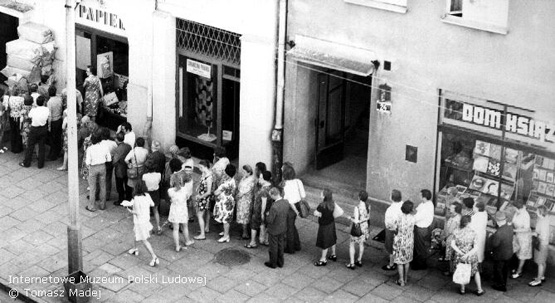
Not many people remember, or want to remember those days behind the Iron Curtain when lining up was a part of everyday routine. Everyday one lined up somewhere, elbowed, pushed and shoved, tramped over people to get inside a store, or an office, or a bus. In those days people lined up for the basic necessities that they could not find regularly, such as bread, meat, flour, toilet paper, or vodka, somehow finding out via the grape vine that this or that store in town will receive a limited supply sometimes next week.

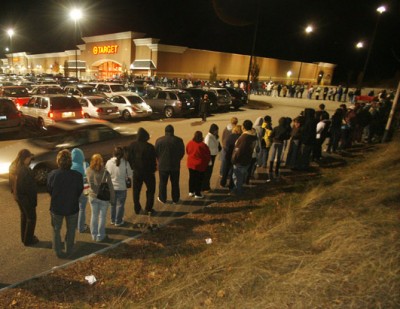
Today we have the "black friday". People line up everywhere on this side of what once was the Iron Curtain. They line up all night for a chance to elbow, push, shove, sometimes even tramp someone to death, all in a rush to buy something.

The difference between line ups in communist countries vs America - over there people lined up for things they needed, here they do it for the sheer excitement, out of boredom, greed and consumerism, sometimes out of false sense of frugality: it's cheap, so I'll buy a truckload, never mind that I'll pay four times the value of this crap in credit card fees...

Communist Poland:


US of A:


26/11/2009

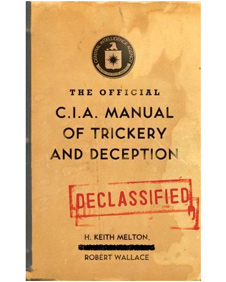
CIA manual of trickery and deception

It includes deceptions such as spiking drinks, pocketing small objects and tying shoelaces to communicate in code.

The CIA ordered copies destroyed in the 1970s, but one survived. It has been republished as The Official CIA Manual of Trickery and Deception.

Among several deceptions detailed in the book, it instructs spies on how to tie their shoelaces to signal other spies - "I have information", "Follow me", or "I have brought another person".

It also shows operatives how to conceal a doping pill in a matchbook, then covertly drop it into a person's drink while distracting them by lighting their cigarette. SOURCE


24/11/2009

JFK assassination, witnesses and odds of dying

In the three-year period which followed the murder of President Kennedy and Lee Harvey Oswald, 18 material witnesses died - six by gunfire, three in motor accidents, two by suicide, one from a cut throat, one from a karate chop to the neck, three from heart attacks and two from natural causes.

An actuary, engaged by the "London Sunday Times," concluded that on November 22, 1963, the odds against these witnesses being dead by February 1967, were one hundred thousand trillion to one. The above comment on the deaths of assassination witnesses was published in a tabloid companion piece to the movie "Executive Action," released in 1973. By that time, part of the mythology of the Kennedy assassination included the mysterious deaths of people who were connected with it. By the mid-1960s, people in Dallas already were whispering about the number of persons who died under strange or questionable circumstances.

Well into the 1980s, witnesses and others were hesitant to come forward with information because of the stories of strange and sudden death which seemed visit anyone with information about the assassination. READ MORE

Are we going to find out what really happened to JFK?


22/11/2009

Psychic Discoveries


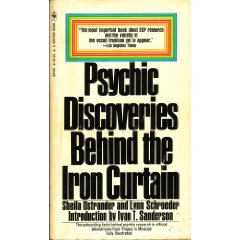
Found this paperback in my local second hand bookstore: Psychic Discoveries Behind the Iron Curtain, by Sheila Ostrander.

This one about academic research to such phenomena as ESP, telepathy, PSI, UFOs, acupuncture, auras, artificial reincarnation, folk healing, occult, etc.

Ah, those fascinating days of the Cold War! It was so much easier for writers to entertain and to thrill...

18/11/2009

I shall not write a screenplay. Yet.

I declined the offer to write a screenplay. People ask me: How can you decline to write a screenplay? What would possess you to ditch such a golden opportunity? Etc., etc.

I blogged about it several times already. My main concern with screenplay writing is the writer's integrity, mainly due to the collaborative nature of the work. Below are my thoughts on the matter, and those who follow my blog will notice that they haven't changed over the years.

I spent my childhood and teenage years in a neighborhood close to the huge TV complex and movie studios. The neighborhood was not an artist’s colony, just a regular residential district, but because of the location it attracted a large number of people from the biz. At the time my good friend’s father was a prominent moviemaker, with a well equipped darkroom that he let me use at will. He was often visited by other folks who lived around - writers, news anchors, and a whole lot of actors. I had an opportunity to watch the creative process of screenplay writing. It was quite the show: plenty of collaborative work accompanied by glass clinking, enacting of the scenes, and so on. It turned me off for good. I am not saying that a screenwriter does not have creative control but only that, at some point, this process involves additional people, and I am a loner when it comes to creative work. I’m one of those recluses who is unknown to his neighbors. My ideal working environment is a deep forest, and ear plugs.

As coincidence would have it I just finished reading Alberto Moravia's Contempt, and found a passage which closes the subject very well (following translation is mine):

Writer is thus a man who is always in the shade, the one who rips his veins so that someone else can win acclaim. Even though two thirds of the film's success is the writer's doing, he never sees his name on the advertising posters where only the names of the actors, director and the producer's are printed. Maybe it is true, as happens very often, that a writer can become a kind of a master of the slave profession and make a substantial income off of it, but he cannot say: "I made this film ... This film is mine." The writer must be content only with the money he receives for his participation, and which eventually becomes the sole reason and purpose of his work.

Does it mean that I shall never write a screenplay? No, but should I ever decide to participate in this spectacle it will be only incidental, something that I might toss off in between books. Currently I am deeply entrenched in two novels, both requiring my entire self.

How the KGB recruited the Spanish Ambassador

"Russian historian Yuri Felshtinsky and former KGB Lieutenant Colonel Vladimir Popov claim in a new book, The KGB Plays Chess, that former IOC President [and Spain's ambassador to USSR], Juan Antonio Samaranch, was hired by the KGB in the late 1970s [...]

[...] Samaranch grew fond of Russian antiques, which he collected and shipped to his home in Spain. All antiques were closely monitored by the KGB; so the Spanish ambassador, a frequent buyer of valuable rarities, was taken note of. An agent from the KGB’s Second Main Directorate, which monitored the Spanish embassy, met with Samaranch and gently explained to him that his actions were subject to prosecution in accordance with the Russian Federation’s Criminal Code and were classified by Soviet law as the smuggling of contraband goods. According to Felshtinsky, Samaranch was offered a choice: he could either be compromised through the Soviet and foreign press detailing his activities, which would undoubtedly have put an end to his diplomatic career, or he could collaborate with the KGB as a secret agent." SOURCE