28/09/2010

Why should we read literature?


"It is often asked: what is the difference between imaginative literature and other sorts of intellectual endeavor?  Are there any kinds of knowledge uniquely available, say, from novels and poems? Why do we read them when we could read books in psychology, sociology, moral philosophy--especially if these are illustrated with vivid examples of ethical, psychological, and social experience?  There are many possible answers to such a question, and I want to explore only one of them, the one that has to do with the contrast between the miscellaneous and the integrated."

READ MORE

How to create your own literary style

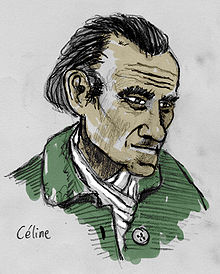
How to create your own literary style and become one of the most influential writers of the century? If you're Louis-Ferdinand Céline your path to immortality may lie in the free use of ellipses, or three dots, he called them his "fancy three dots":


Just kidding. Céline's "Castle to Castle" is an interesting book, though dotted to a point that it becomes tiring to read.


24/09/2010

A better world, on the feet of doves

"two principles were locked in combat for the world: might and right, tyranny and freedom, superstition and knowledge, the law of obduracy and the law of ferment, change and progress.

There was no doubt which of these two forces would gain the victory -- that of enlightenment, or reasoned advancement toward perfection. Because human progress was always gathering up new nations in the course of its brilliant advance. Yet there was much to be done before total victory, and great and noble efforts would have to be made by those to whom the light had been passed on, if that day were ever to come when monarchies and religions would at last collapse.

That day would come, if not on the feet of doves, then on the pinions of eagles, and would burst as the dawn of universal brotherhood under the emblem of reason, science, and justice."

Thomas Mann, The Magic Mountain

23/09/2010

Jury Duty

I suspect that many writers would jump at the call for jury duty. I should too, after all how often does one get a chance to observe so closely a criminal case? It's a civic duty. If only it didn't, always, come at a bad time. What is one to do? It may be time to fill out the questionnaire with Leo Tolstoy's words:

"The usual argument "What is one to do with the evil doers? Surely not let them go unpunished?" no longer confused him. This objection might have a meaning if it were proved that punishment lessened crime, or improved the criminal, but when the contrary was proved, and it was evident that it was not in people's power to correct each other, the only reasonable thing to do is to leave off doing the things which are not only useless, but harmful, immoral and cruel.
For many centuries people who were considered criminals have been tortured. Well, and have they ceased to exist? No; their numbers have been increased not alone by the criminals corrupted by punishment but also by those lawful criminals, the judges, procureurs, magistrates and jailers, who judge and punish men.

Nekhludoff now understood that society and order in general exists not because of these lawful criminals who judge and punish others, but because in spite of men being thus depraved, they still pity and love one another."
22/09/2010

15-year old hitman, the next YA bestseller

In 1878 Jules Verne, author of immensely popular YA novels, published a story about a 15 year old captain:

"Dick Sand is a fifteen year old boy serving on the schooner "Pilgrim" as a sailor; he is left in charge of the ship with no experienced sailors to help him."

Fast forward 132 years, and you'll find that YA characters in traditionally adult professions are doing just fine:

"A 15-year-old boy turned himself in to Peruvian police and confessed to killing 10 people, apparently making him Peru’s youngest hitman, local media reported Thursday.

Known by the nickname “Gringacho” and not further identified by authorities, the presumed hitman said that he was recruited by a criminal network in the city of Trujillo, 570 kilometers (353 miles) north of Lima, when he was just 12 years old.

From what he told the police, over the past three years he killed a total of 10 people, among then a young woman who was eight months pregnant." SOURCE

20/09/2010

Would you eat insects to save the Earth?


"other countries embraced insects as food long ago, with folks in Latin America and Asia regularly snacking on locusts and even scorpions. And they may be onto something: Bugs are not only high in protein — they're low in fat, carry extremely low carbon footprints, and are cheap to produce. They possess all the traits necessary to become the next sustainable superfood.

Meat's impact on the environment is well-documented, with livestock production creating about 18 percent of the globe's greenhouse gas emissions. Even fruits and veggies typically take a lot of resources — like water, fertilizers, pesticides and herbicides, and mechanized farm equipment — to produce. Bugs are naturally plentiful, and raising them as a food source would only require minimal resources. Plus, some insects like locusts are notorious agricultural pests. Eating them would reduce the need for environmentally degrading chemical pesticides.

Not only do bugs tread lightly (or in some cases, fly lightly), they're a cheap and nutritious food source. Bugs boast high amounts of protein and low amounts of fat. Perhaps America's obesity epidemic wouldn't be at such massive proportions (literally) if more folks took up entomophagy."

SOURCE

Surroundings vs Creativity

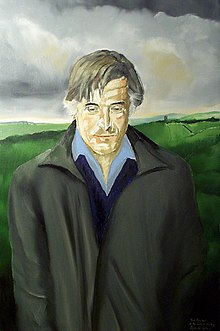
"The future poet laureate revealed his private reservations in a series of letters to Olwyn Hughes after moving to Massachusetts with his first wife, the American poet Sylvia Plath, in 1957.

In one letter, penned shortly after the move, he said that he would rather “eat mud” than continue to be exposed to American consumerism.

[...] in one letter to his sister, written in 1957, the poet complained that he felt stifled by being surrounded by fast food chains, stores and branding which he felt were all aimed at the “average man”.

He wrote: “Luxury is stuffed down your throat – a mass-produced luxury – till you feel you’d rather be rolling in the mud and eating that.”

MORE